AI in Construction:
Building Smarter, Safer, and Faster
Construction is one of the world's largest industries—and one of its least digitized. Projects routinely run over budget and behind schedule. Safety incidents claim thousands of lives annually. AI is changing this, bringing intelligence to an industry ripe for transformation.

Introduction: Construction's AI Opportunity
Construction represents roughly 13% of global GDP, yet productivity has barely improved over decades. Projects are complex, fragmented, and inherently uncertain. Weather, labor availability, material delays, and design changes create constant challenges. Information is siloed across contractors, architects, and owners.
AI addresses these challenges by finding patterns in complexity. Machine learning predicts delays before they cascade. Computer vision monitors safety continuously. Natural language processing extracts insights from project documents. Optimization algorithms create better schedules and resource allocations.
The industry is finally adopting these technologies. Early movers are seeing 15-25% cost reductions, dramatic safety improvements, and faster project delivery. The construction AI market is growing 25%+ annually as the industry digitizes.
1. AI for Project Management

1.1 Schedule Optimization
Construction schedules are notoriously unreliable. AI creates more realistic schedules by learning from historical project data. It considers weather patterns, labor productivity, material lead times, and interdependencies that human planners might miss.
More importantly, AI continuously updates schedules as conditions change. When a delay occurs, AI calculates the cascade effect and suggests mitigation strategies. Project managers get early warning of problems while there's still time to act.
1.2 Risk Prediction
AI models predict project risks—which subcontractors are likely to miss deadlines, which design decisions will cause issues, which site conditions will create problems. Risk assessment becomes proactive rather than reactive.
1.3 Resource Optimization
AI optimizes resource allocation across projects—labor, equipment, materials. It balances availability, cost, and schedule requirements to minimize waste and improve utilization. Multi-project optimization ensures portfolio-level efficiency.
1.4 Cost Estimation
AI-powered estimation uses historical project data to predict costs more accurately. It learns from past estimates vs. actuals, identifying factors that cause variance. Machine learning improves estimate accuracy 20-30% over traditional methods.
2. AI for Safety

2.1 Computer Vision Safety Monitoring
Cameras equipped with AI continuously monitor construction sites for safety violations—workers without hard hats or safety vests, unsafe ladder usage, proximity to hazards. Alerts are immediate, enabling intervention before incidents occur.
This isn't replacement for safety personnel—it's augmentation. AI monitors areas humans can't watch continuously, catches violations that might be missed, and creates objective documentation for safety programs.
2.2 Predictive Safety Analytics
AI analyzes project data to predict safety risks—which activities, conditions, and combinations are most likely to result in incidents. Safety resources can be concentrated where risk is highest. Leading indicators are identified before lagging incidents occur.
2.3 Safety Documentation
AI automates safety documentation—tracking certifications, generating reports, and identifying compliance gaps. What was manual paperwork becomes automated assurance.
3. AI for Quality
3.1 Visual Quality Inspection
Computer vision inspects construction work for defects—cracks in concrete, misaligned components, incomplete work. Drones and cameras capture imagery; AI analyzes it against specifications and standards.
Benefits include more consistent inspection, earlier defect detection, and comprehensive documentation. Issues identified during construction are far cheaper to fix than after completion.
3.2 Progress Monitoring
AI compares site imagery against BIM models to track progress automatically. It identifies what's been completed, what's in progress, and what's behind schedule. Progress reporting becomes accurate and objective rather than estimated.
3.3 Quality Prediction
AI predicts quality issues based on conditions—weather, material lots, crew experience, schedule pressure. High-risk work gets additional attention before problems emerge.
4. AI for Design and BIM
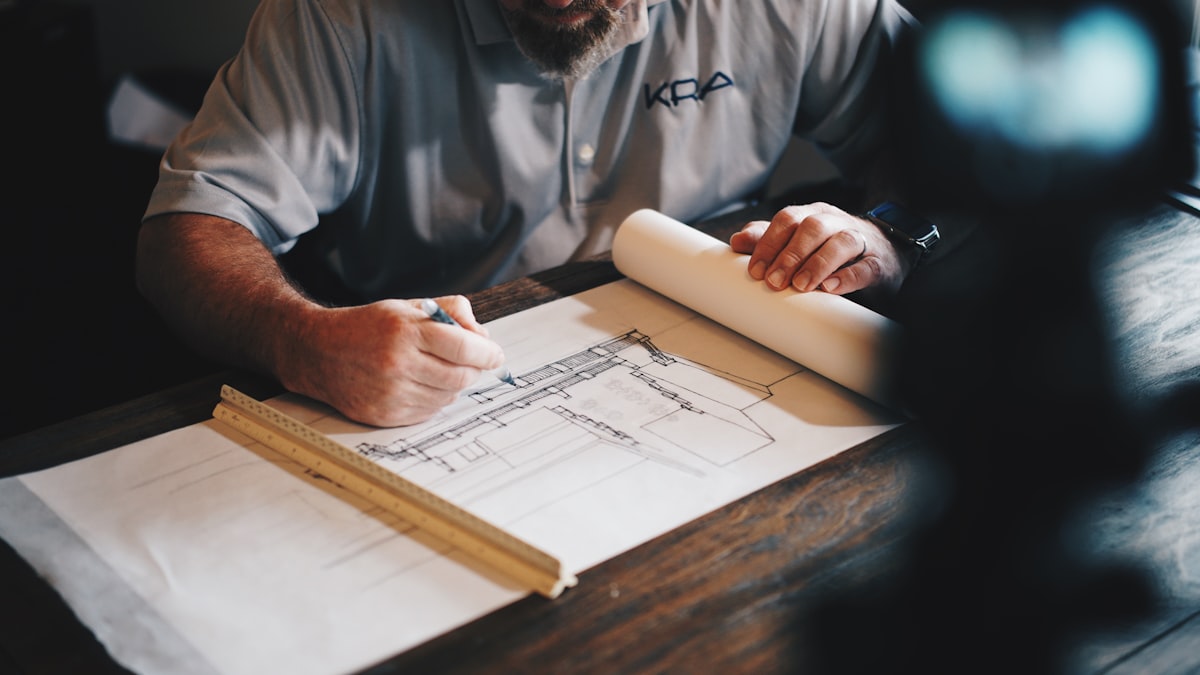
4.1 Generative Design
AI generates design options that meet specified constraints—structural requirements, spatial programs, energy performance, cost targets. Designers explore vastly more options than traditional processes allow, often finding solutions humans wouldn't consider.
4.2 Clash Detection and Resolution
AI enhances BIM clash detection by prioritizing issues and suggesting resolutions. It learns from how past clashes were resolved, accelerating coordination across disciplines.
4.3 Energy and Performance Simulation
AI accelerates building performance simulation, enabling more iterations and optimization. Design decisions are informed by predicted energy consumption, daylighting, and occupant comfort.
5. Technical Architecture
| Application | Technology | Purpose |
|---|---|---|
| Safety Monitoring | Vertex AI Vision | Real-time safety violation detection |
| Quality Inspection | Vertex AI + Custom Vision | Defect and progress monitoring |
| Project Analytics | BigQuery + Vertex AI | Schedule and cost prediction |
| Document AI | Document AI | Construction document processing |
| IoT Platform | Cloud IoT Core | Equipment and sensor monitoring |
6. Implementation Roadmap
Phase 1: Foundation (Months 1-6)
- Deploy safety monitoring on high-risk projects
- Pilot schedule prediction and optimization
- Establish data collection infrastructure
- Baseline current metrics for ROI measurement
Phase 2: Expansion (Months 7-12)
- Roll out safety AI to all projects
- Deploy quality inspection AI
- Integrate with project management systems
- Expand predictive capabilities
Phase 3: Optimization (Months 13-24)
- Full portfolio integration
- Advanced optimization and generative design
- Continuous improvement with accumulated data
- Industry-leading AI-powered operations
7. Results
Case Study: General Contractor
- Safety incidents reduced 55% with AI monitoring
- Schedule variance improved 30% with prediction
- Rework costs reduced 35% with quality AI
- Bid accuracy improved 25% with ML estimation
Case Study: Infrastructure Developer
- Project costs reduced 18% with AI optimization
- Documentation time reduced 40%
- Progress reporting automated 80%
- Change order disputes reduced 50%